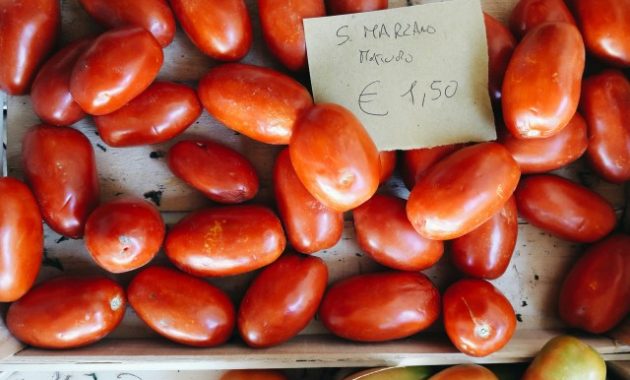
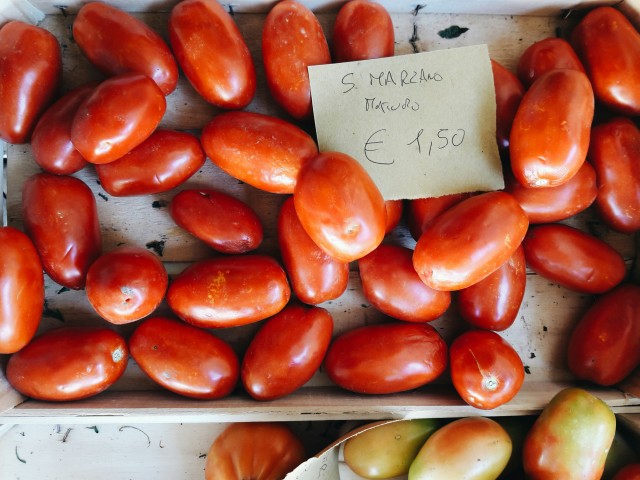
Quite possibly the best way to enjoy really good, ripe summer tomatoes – as well as making the most of spending as little time in front of a hot stove as possible – is raw tomato sauce for coating pasta.
It’s something Marco makes for lunch on a warm day when he’s craving pasta al pomodoro (his ideal comfort food), but either doesn’t have the patience to cook the sauce or the desire to turn on the stove (except to boil the pasta).
Pasta, in any shape, draped in tomato sauce in any form — fresh, raw, tinned or oven roasted — is classic Italian comfort food. It’s what you’ll find on children’s menus or traditional, busy lunchtime trattoria menus. Tomato sauce for pasta is so versatile and also becomes a vehicle for other flavours to take part — add guanciale and you have amatriciana. Add fried eggplants and a showering of ricotta salata and you have norma.
Tomatoes are so ingrained in the Italian psyche and yet it took a trip across the globe to get them from the Americas to Europe and to Italy via Spain in 1596. Then it took a century or so to overcome the fear of poisoning from these strange fruits. Tomatoes found fertile grounds in the area around Naples and this is where they really began to thrive — in the kitchen too. Goethe’s Italian Journey, based on the diaries kept during his travels to Italy in 1786-88, recounts the pasta he experienced in Naples at that time, “As a rule, it is simply cooked in water and seasoned with grated cheese.”
But exactly around this time, we also find the first Italian recipe for tomato sauce in philosopher-chef Vincenzo Corrado’s Cuoco Galante, published in Naples in 1773. It is lightly spiced with cinnamon and cloves and he notes its use for enriching meat and fish dishes. Shortly after, pasta al pomodoro appears in Antonio Nebbia’s recipe book Cuoco Maceratese from Le Marche.
Either way you do it — ripped up, fresh tomatoes, or straight out of a tin, done well and kept simple, pasta al pomodoro can be everything you ever wanted in a dish.

Patience Gray, who spent 20 years in the Mediterranean (including Tuscany and Puglia) and wrote about her food experiences in her wonderful recipe-memoir, Honey from a Weed (1986), includes a recipe for this refreshing raw tomato sauce that she notes does not need any cheese (I agree with her, though sometimes, if you want to make it a little more substantial, a ball of fresh fior di latte mozzarella, torn up, goes quite nicely — sort of like a caprese salad tossed with pasta).
She instructs to peel, remove seeds and chop ripe yet firm tomatoes, then to pound them in a mortar with 2-3 cloves of garlic, salt and a hot green pepper. Ripped up basil leaves (tomatoes are, as Jane Grigson says, basil’s soulmate) and olive oil finish off this “dressing” and it’s added to hot pasta the moment it has been drained. The result is a not piping-hot pasta dish, so you won’t burn your mouth on the first bite.
Jane Grigson in her Vegetable Book (1978) has a similar recipe but adds a couple of spring onions to the garlic, leaves out the chile and lets the mixture sit for 3 hours, in the refrigerator, for the flavours to draw out and get to know each other.
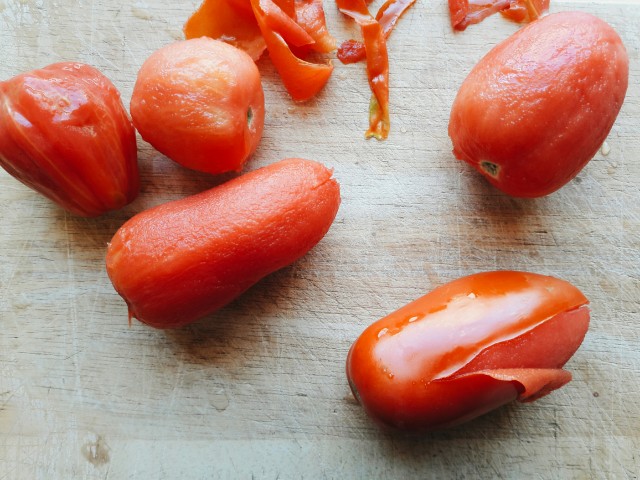
More than recipes, I think these are simply good ideas, suggestions, for doing as little as necessary to this delicious preparation – peeling the skin off the tomatoes is important, as is removing the seeds so you’re left with just the juicy, fleshy part of the tomato. There are many ways to remove the skin off tomatoes by blanching. Ms Gray instructs to pour boiling water over the tomatoes in a bowl, but I like to blanch them directly in the pot where the pasta will cook – it saves time and washing up (and I like to think it even adds a bit of tomato “essence” for the pasta can soak up).
You can chop (my preference) but some like to blend the tomatoes for a smooth sauce. You can prepare it in minutes or well in advance and let it chill. I find that you can get the best out of the tomatoes if you let them sit out of the fridge for about 15 minutes with a good seasoning of salt – at room temperature fresh tomatoes are at their tastiest and the time allows the salt to draw some of the juice out of the chopped tomatoes. If you have really good tomatoes, fresh basil and good olive oil, you’re already more than half way there.

Salsa cruda al pomodoro
Raw tomato sauce for pasta
Serves 4
- 1 kg ripe but firm tomatoes
- a handful of fresh basil leaves
- 2-3 tablespoons extra virgin olive oil
- good pinch of sea salt flakes
- optional: finely chopped garlic, dry or fresh chilli, 2 finely chopped spring onions
- 350 grams spaghetti
Score a cross on the bottoms of the tomatoes. Bring a large pot of water to boil (the one you will use for the pasta) and place the tomatoes in the pot to blanch for about 20 seconds. Remove with a slotted spoon and immediately place them in a bowl of ice water. Once cool enough to handle, the skins will peel off easily.
In the meantime, keep the water boiling and add salt (aim for 1 teaspoon for each litre/4 cups of water), then the pasta. Boil according to packet directions.
Chop the tomatoes into quarters and scrape out the seeds. Chop the rest of the flesh and either leave roughly chopped (my preference) or, if you prefer a smooth sauce, you can pulse in a food processor, smash with a mortar and pestle (Gray’s preference) or pass through a food mill (if adding garlic or any of the other optional flavours, include them with the tomatoes at this stage).
Place in a bowl with a good pinch of sea salt, torn basil leaves (don’t chop them with a knife, rip them by hand) and the extra virgin olive oil add then stir to combine. Set aside until the pasta is ready.
Drain the al dente pasta and tip immediately into the bowl of tomatoes and toss to coat. Serve immediately.
You may also like my article on the history of these 10 Iconic Italian Tomato Dishes for Food52!
Originally posted 2016-08-29 00:00:00.